
Your blogThe Complete Guide to Custom Live Edge Wood Benches — How to Choose the Right Species, Edge, and Legs for Your Space post
Everything you need to know before ordering a custom live edge bench in Canada. Species, edge profiles, steel leg options, sizing, and finish — all in one guide.
BENCHES
Mr Shelvington
6/10/20265 min read
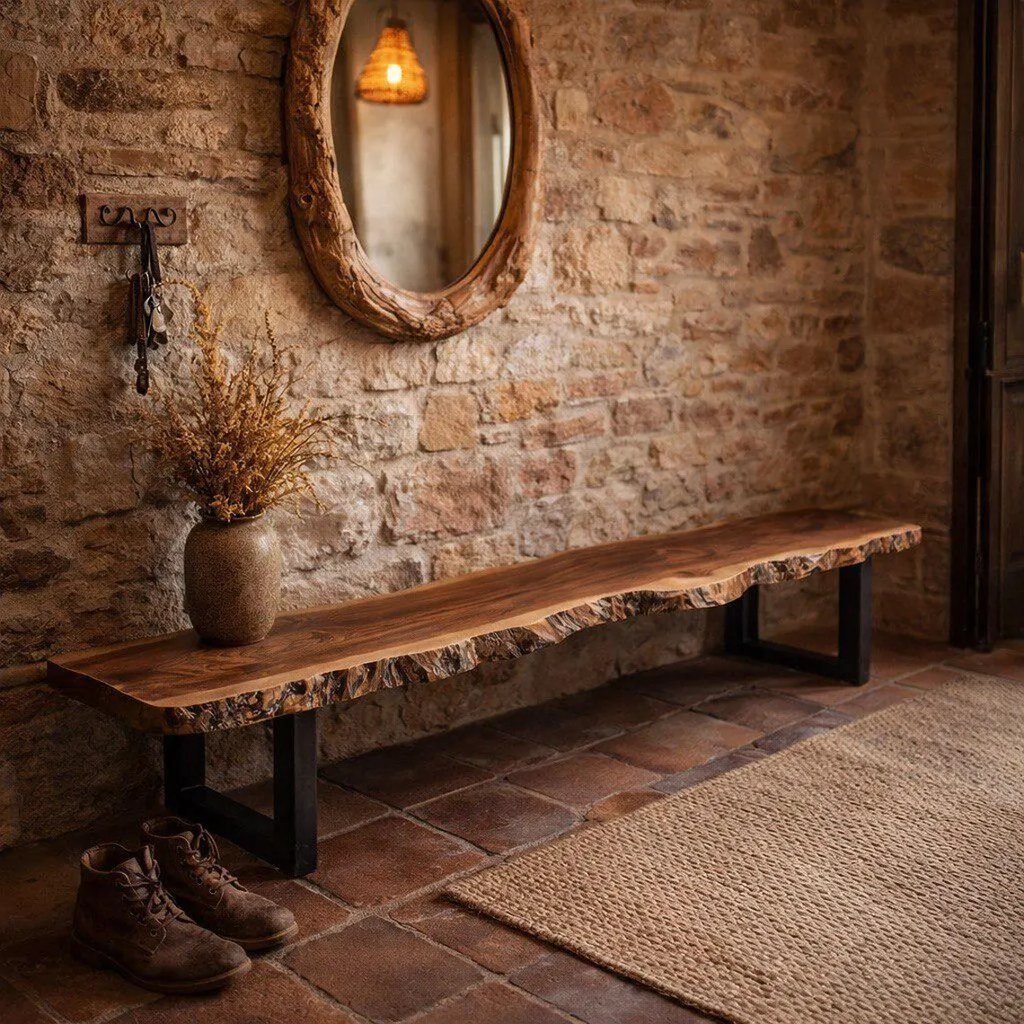
A custom wood bench is one of the most versatile pieces of furniture you can add to your home. A single slab of black walnut in your entryway. A wide maple bench at the foot of the bed. A live edge oak seat running the length of your dining table. Done right, a wood bench isn't just functional — it's the piece that ties the whole room together.
At Riverside Workshop, every bench we build starts as a hand-selected solid hardwood slab — kiln-dried, surfaced flat, and finished to order. No finger joints. No veneers. No plywood cores. Just solid wood, built to sit for decades.
If you're thinking about ordering a custom live edge bench and aren't sure where to start, this guide covers everything: species, edge profiles, leg options, sizing, and finish — so you can walk into your order with confidence.
Why Solid Wood Beats Everything Else for a Bench
Most benches sold in furniture stores are engineered wood with a veneer surface — they look fine for a few years, then chip, swell, and degrade. A solid hardwood bench, by contrast, ages with the wood. Small surface marks can be sanded and re-oiled. The structure doesn't fail. And over time, a walnut or maple bench will only look better.
A single-slab bench also has something engineered pieces can never replicate: it came from one tree. The grain runs continuously from one end to the other. The live edge, if you choose it, preserves the exact outline of where the tree met the bark. That's not something you can manufacture — it either is or it isn't, and it isn't in anything you'll find at a big box store.
Step 1 — Choose Your Wood Species
The species you choose sets the tone for everything else — colour, grain character, hardness, and how it ages. Here's how the main options compare:
Black Walnut
The most popular choice for a reason. Black walnut has a deep chocolate-brown grain with natural figure and warmth that reads as genuinely luxurious without trying too hard. It's hard, durable, and ages beautifully — darkening and developing a patina over time. Best suited for living rooms, entryways, and primary bedrooms where you want presence and warmth.
Hard Maple
Where walnut brings drama, maple brings clarity. Hard maple has a tight, consistent grain with a light blonde tone — clean, refined, and incredibly versatile. It works equally well in a minimalist Scandinavian interior and a traditional cottage kitchen. Maple is also the hardest of the three primary species, making it an excellent choice for high-traffic spots like mudrooms and dining areas.
White Oak
Bold ring-porous texture with strong visual character and a warm grey-tan tone. White oak sits between walnut and maple on the colour spectrum — it has more visual weight than maple but is lighter and more contemporary than walnut. It's highly durable, dimensionally stable, and has become one of the most sought-after species in modern Canadian interiors.
Other Species
Other domestic and exotic species are available on request — spalted maple, cherry, ash, and more. If you have a specific species in mind or want to match existing furniture, get in touch and we'll work from there.
Step 2 — Live Edge or Straight Edge?
This is often the first question buyers ask, and the answer almost always comes down to the room.
Live Edge
The natural bark edge of the slab is preserved and cleaned — every piece is unique. Live edge benches have an organic, grounded quality that suits homes with natural materials, exposed wood floors, or a more relaxed, earthy aesthetic. They're also statement pieces: a live edge bench in a hallway or at the foot of a bed immediately draws the eye.
Live edge doesn't mean rustic. A live edge black walnut bench with hairpin steel legs is a thoroughly modern piece — the combination of raw organic material and industrial hardware creates a tension that works in contemporary interiors just as well as traditional ones.
Straight Edge
Clean, milled edges give the bench a more architectural profile. Straight edge suits minimalist, contemporary, or transitional interiors where clean lines matter. Available with square, eased, or bevelled edge profiles depending on the look you're after.
Not sure which to choose? In general: if your space has a lot of clean lines and modern finishes, straight edge. If your space has texture, natural materials, or an eclectic mix, live edge.
Step 3 — Pick Your Steel Legs
The leg style is where the bench goes from a slab of wood to a finished piece of furniture. All our benches ship with solid steel legs in a range of profiles:
Hairpin legs — three-rod welded steel; the classic choice for live edge pieces. Light, open, and industrial without being heavy.
Rectangular flat bar — a solid, architectural leg with a more substantial visual weight. Works well with straight edge builds and larger slab widths.
Trapezoid — angled legs that flare outward slightly; gives the bench stability and a more designed look.
Other profiles available on request.
All leg styles come in multiple powder-coat colours — matte black is the most popular, but raw steel, white, and custom colours are available. Leg height is fully customizable: standard bench seat height runs 17–18 inches, but if you need something lower for a meditation room or higher for a counter-height application, we build to your spec.
Step 4 — Sizing Your Bench
Standard bench lengths at Riverside Workshop run from 3ft to 8ft, but we build beyond that on request.
When in doubt, measure the wall or the furniture you're anchoring to and go from there. A bench that's slightly too short for the space reads as an afterthought. One that fills the wall correctly reads as intentional.
Step 5 — The Finish
All our benches are finished with Rubio Monocoat hardwax oil — a plant-based, food-safe finish that penetrates the wood rather than building up on top of it. The result is a surface that feels like wood, not plastic. No thick lacquer shell. No yellowing over time.
Available in natural (lets the wood speak for itself) and a range of stain tones — white wash, smoke, aged, and others. Samples are available on request if you want to see how a finish looks on your specific species before committing.
One important practical note: hardwax oil finishes can be spot-repaired in the field. If your bench gets a scratch or a dry patch a few years from now, you don't need to refinish the whole piece — just clean, lightly sand, and re-oil the affected area.
Where Do Custom Wood Benches Work Best?
The short answer is: almost anywhere you need seating. Here's where our customers most commonly place them:
Entryway and hallway — the most natural fit. A live edge bench at your front door gives visitors somewhere to sit while they take their shoes off, and anchors the entry with a piece that actually has presence. Pair with live edge shelving above for a cohesive look.
End of bed — a solid wood bench at the foot of the bed elevates the whole room. In a master bedroom especially, it turns a functional piece (somewhere to sit while you get dressed) into a design moment.
Dining room — a custom bench on one side of the dining table and chairs on the other is one of the most practical and visually interesting ways to seat a dining space. The bench can be built to the exact length of your table and stained to match or complement it.
Living room — as a coffee table alternative, a media console, or a standalone accent piece, a wide low bench in a living room adds warmth that a glass or metal piece simply can't.
Mudroom — a durable maple or oak bench with storage below is a hardworking piece that earns its keep daily.
Ready to Order?
Every bench we build is made to your dimensions — length, depth, leg height, species, edge profile, and finish. Lead time for standard builds is 2–3 weeks; larger or more complex pieces run 3–4 weeks.
Start your custom bench order at Riverside Workshop →
Or browse completed bench builds and available models at riversideworkshop.com/custom-wood-benches.
Riverside Workshop builds custom live edge and solid wood furniture handcrafted to order in Canada — benches, shelving, countertops, desks, bar tops, and more. Shipped coast to coast.